

Economy Home Decor: Smart Strategies for Beautiful Spaces
Posted by graues on 13.02.25
Economy Home Decor: Smart Strategies for Beautiful Spaces
You want a home that feels warm, put-together, and genuinely yours — but you don't want to drain your savings to get there. Sound familiar? The good news is that economy home decor is less about finding the cheapest items on the shelf and more about making smart, intentional choices that deliver real visual impact without the retail markup.

The difference between a home that looks expensive and one that looks like a budget project usually comes down to strategy, not spending power. With the right approach — a solid design foundation, smart sourcing habits, and patience — you can create rooms that feel polished, personal, and genuinely beautiful at a fraction of what you might expect.
This guide covers everything from where to find hidden gems and when to buy, to which items are worth splurging on and which ones you can absolutely save on. If you've ever felt overwhelmed by the gap between your inspiration board and your bank account, this is the practical guide you've been waiting for.
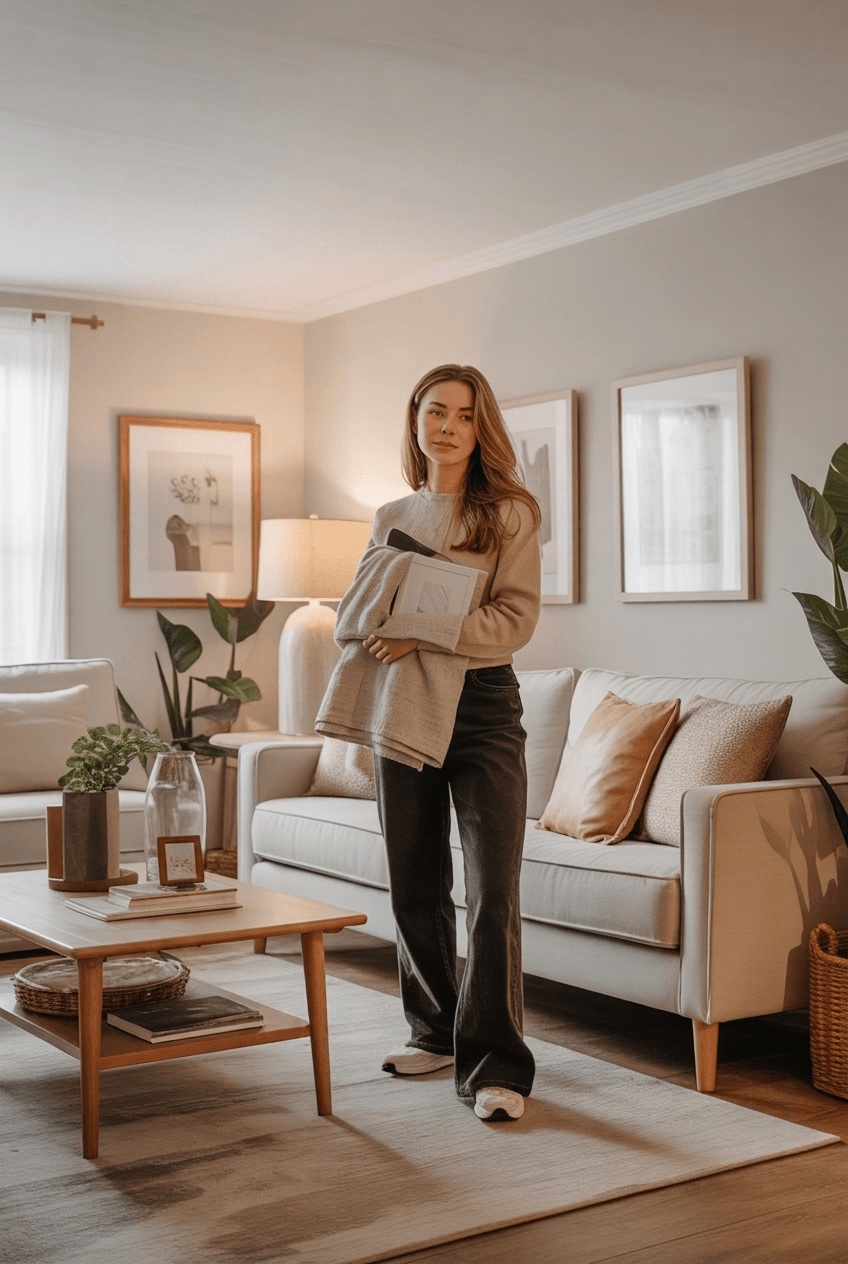
Key Takeaways
- Economy home decor is about strategic spending, not just buying the cheapest options available.
- Mixing budget finds with a few quality investment pieces creates a more polished, lasting look.
- Thrift stores, estate sales, and online marketplaces offer unique pieces at a fraction of retail prices.
- DIY projects and repurposing what you already own can cut costs while adding genuine character.
- Understanding your personal style upfront prevents costly impulse purchases and decorating regret.
Why Economy Home Decor Works When Done Intentionally
Budget decorating has a reputation problem. People assume it means mismatched furniture, flimsy shelves, and a space that quietly announces it was done on the cheap. But that's the result of shopping without a plan — not the result of a limited budget.
The rooms that genuinely impress people are rarely the ones with the most expensive pieces. They're the rooms where everything feels considered: the scale is right, the colors work together, and there's a sense of personality rather than showroom uniformity. Those qualities cost nothing extra. They come from patience, creativity, and knowing your own taste well enough to be selective.
Decorating wisely on a budget means knowing where quality genuinely matters — and being honest with yourself about where it doesn't. A $40 vase and a $400 vase can both look beautiful in the right context. A $300 sofa and a $2,000 sofa are a very different story if you're sitting on it every evening for the next decade. That kind of discernment is what separates a well-decorated home from a cluttered one, regardless of what was spent.
Understanding Budget-Friendly Design Fundamentals
Before you buy a single thing, it helps to understand what actually makes a room feel finished and cohesive. Spoiler: it's not the stuff. It's the structure.
A cohesive color palette is the single most powerful (and affordable) design tool you have. Paint transforms a room for relatively little money, and choosing a neutral base gives you the flexibility to swap accessories seasonally without a full overhaul. Three or four colors used consistently throughout a room — walls, textiles, and accents — will always look more intentional than ten colors used randomly.
Lighting is next. Overhead fixtures alone create flat, unflattering light. Adding a floor lamp, a couple of table lamps, or even simple candles creates warmth and dimension that no amount of decor accessories can replicate. Good lighting makes budget pieces look better; bad lighting makes expensive pieces look worse.
Furniture scale matters more than most people realize. An oversized sofa in a small room, or a tiny rug under a large dining table, will look off no matter how nice the individual pieces are. Measure your space carefully before buying anything large. And don't underestimate negative space — breathing room between pieces makes a room feel curated rather than crammed.
Finally, resist the urge to fill every corner. Clutter is the fastest way to undermine even the most thoughtfully chosen pieces. Edit ruthlessly: if something doesn't earn its place visually, it goes.

Where to Source Affordable Decor
The hunt is genuinely half the fun when you're decorating on a budget — and the places worth hunting have never been better.
Thrift stores, estate sales, and consignment shops are where the real finds live. Furniture and decor with real character, solid construction, and decades of life left in them — often priced at a fraction of what anything comparable would cost new. The environmental benefit of giving these pieces a second life is a genuine bonus. The key is patience: you won't always find exactly what you need on your first visit, but regular browsing pays off.
Online marketplaces have genuinely changed the game for budget decorators. Facebook Marketplace, Craigslist, and neighborhood apps regularly feature perfectly good furniture being given away or sold cheaply simply because someone is moving or redecorating. Check these platforms consistently rather than buying the first thing you see — the right piece at the right price is often just a few days away.
Discount and overstock retailers have also improved considerably. Stores that specialize in closeouts and overstock often carry name-brand items at steep discounts. The catch is that selection is unpredictable, so flexibility in your vision helps. If you're committed to a very specific piece, you'll likely pay full price somewhere. If you're open to a range of styles and colors that fit your palette, bargains are genuinely available.
Thrifted home decor brings something mass-produced items simply can't offer: uniqueness. A vintage wooden lamp, a ceramic bowl with a hand-thrown look, a linen runner with genuine texture — these are the pieces that give a room personality and make it feel lived-in rather than lifted from a catalog.
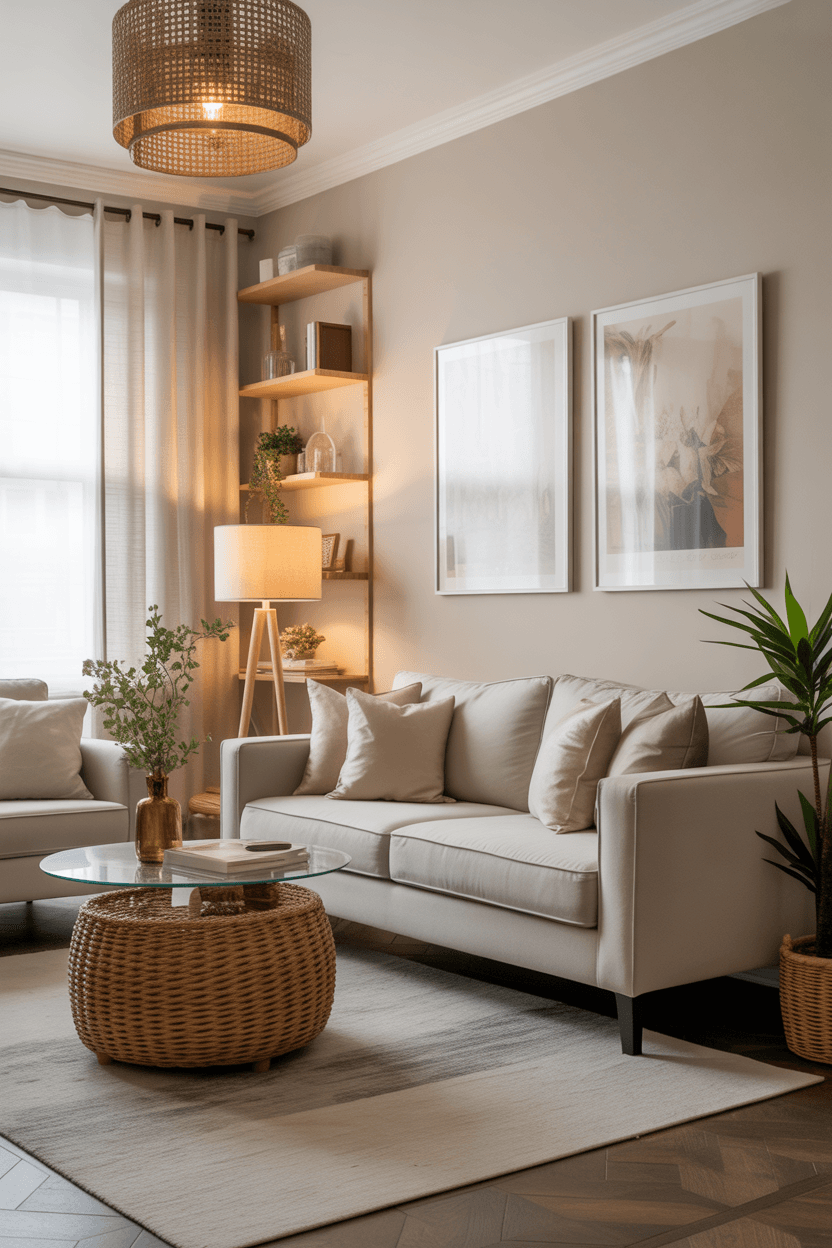
Timing Your Purchases Strategically
Furniture and home decor follow fairly predictable sale cycles, and knowing them can save you a meaningful amount without requiring you to compromise on what you actually want.
January and July are typically the best months to find deep discounts, as retailers clear inventory to make room for new collections. End-of-season clearances for outdoor furniture, bedding, and seasonal decor can bring prices down significantly. Holiday weekends often feature promotions too — though it's worth comparing prices beforehand, since not every "sale" reflects a genuine reduction.
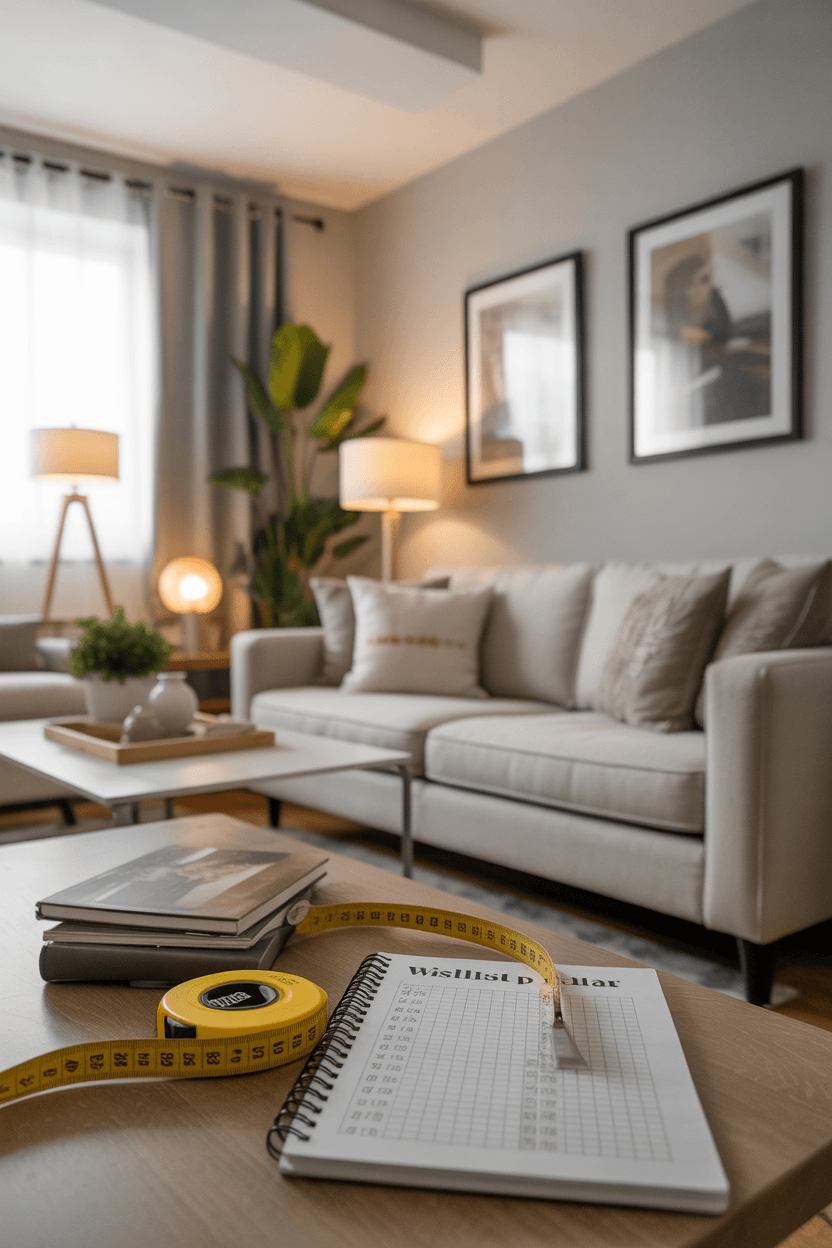
Beyond the calendar, timing your purchases strategically does something else valuable: it slows you down. Waiting before buying gives you time to confirm that a piece actually fits your space, your palette, and your overall vision. Impulse purchases are one of the most common (and expensive) mistakes in budget decorating. A wish list with measurements and reference photos is a simple but powerful way to shop with purpose rather than enthusiasm.
Balancing Quality and Cost
One of the most common mistakes in affordable decorating is treating the budget as a ceiling that applies equally to everything. It doesn't. Some items genuinely benefit from higher investment — they affect your comfort, safety, or daily experience in ways that compound over years. Others? The budget version works just as well.
This isn't a rigid rulebook — your lifestyle shapes your priorities. If you work from home, a quality desk chair matters more than expensive bedding. If you have young children, durable and washable upholstery outweighs trendy fabrics. Use the table as a starting point, then adjust based on how you actually live in your space.
DIY and Repurposing Ideas That Actually Save Money
DIY has a certain appeal in budget decorating — and when it's the right project, it genuinely delivers. But it's worth being realistic about time, tools, and skill level before committing to a project that ends up costing more than buying something ready-made.
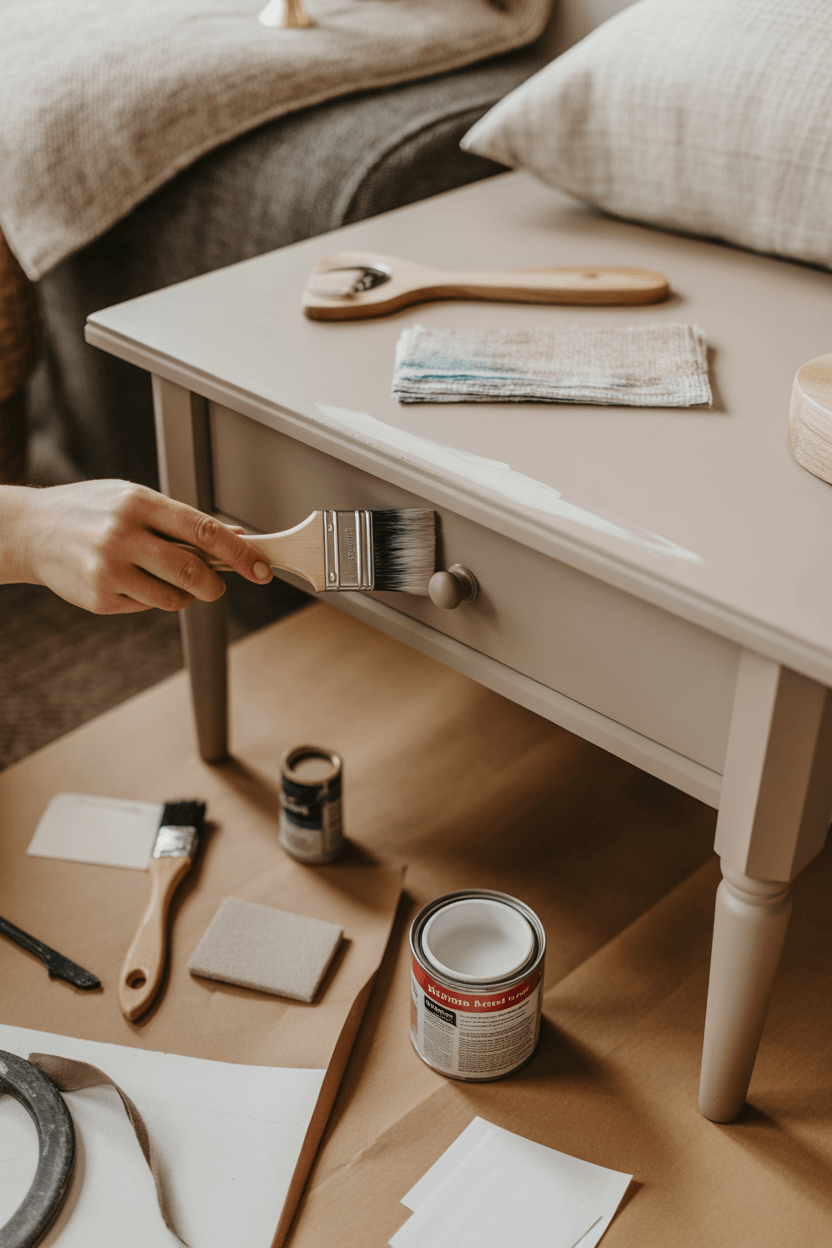
The DIY projects with the best return tend to be the simpler ones. Painting furniture is one of the highest-value things you can do: a coat of chalk paint can transform a dated thrift-store dresser into something that looks intentional and fresh. Swapping hardware — drawer pulls, cabinet knobs, curtain rings — is inexpensive and takes minutes but has a disproportionate effect on perceived quality. Simple wall art, whether you're framing a fabric swatch, printing a black-and-white photo, or creating an abstract canvas, adds personality at almost no cost.
Other worthwhile repurposing ideas: using a vintage basket as a plant holder or blanket storage, turning an old lamp with a new shade into a statement piece, or using a wooden crate as a side table. Basic furniture repair — tightening wobbly chair legs, fixing sticky drawers, touching up scratches — can also rescue thrift store finds that others walked past for minor issues.
Where DIY can actually cost more: complex upholstery projects (materials and foam add up quickly), intricate woodworking without the tools, or anything requiring professional finishing. For those, buying secondhand or waiting for a sale often makes more financial sense.
How to Make Budget Decor Look More Expensive
The gap between budget decor that looks cheap and budget decor that looks considered often comes down to a handful of small, deliberate choices.
- Use a limited color palette. Three to four colors used consistently make even inexpensive items look intentional rather than random.
- Edit relentlessly. Remove anything that doesn't actively contribute to the space. Fewer, well-chosen pieces always look more expensive than abundant clutter.
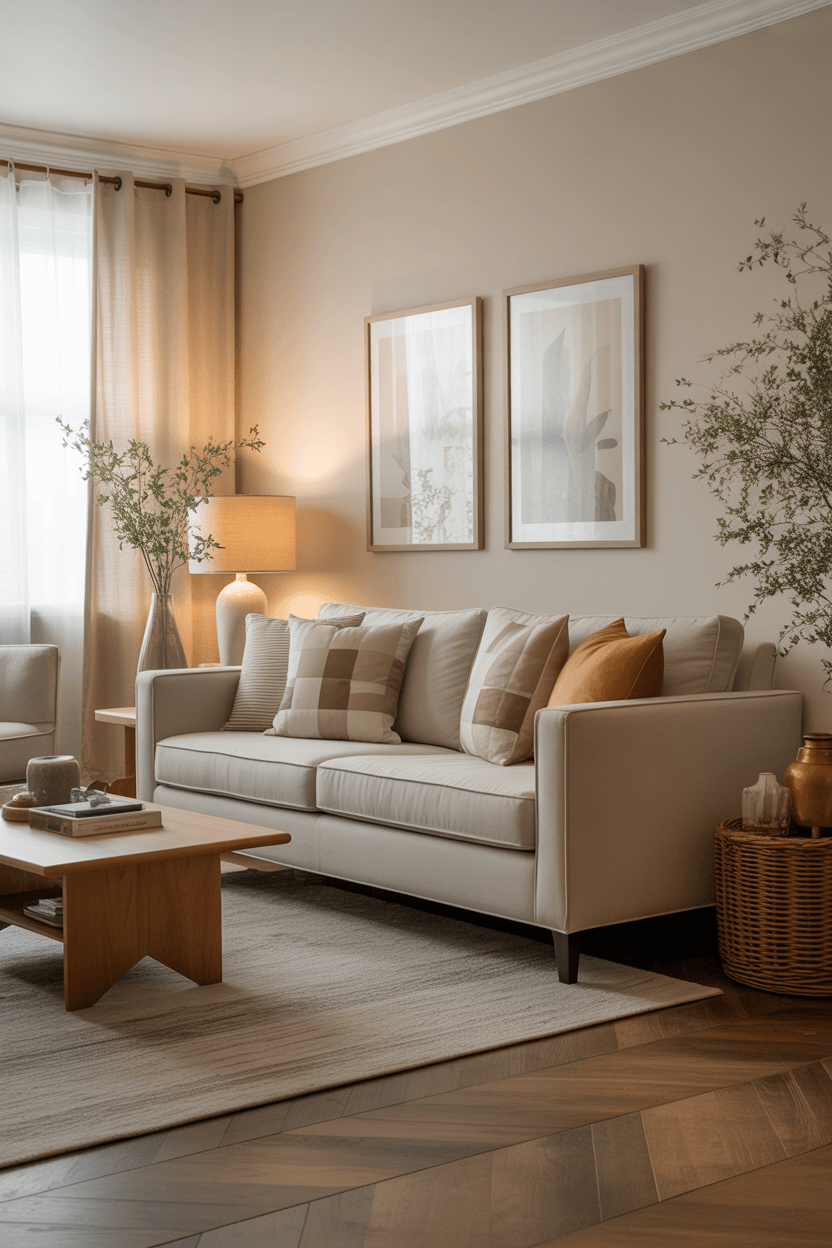
- Mix high and low deliberately. Pair an affordable sofa with quality throw pillows. Give a budget coffee table a well-styled surface. Strategic mixing looks planned; accidental mixing looks like a gap in budget.
- Upgrade small details. New drawer pulls, a quality lampshade, a good-looking curtain rod — these finishing touches have an outsized effect on how a room reads.
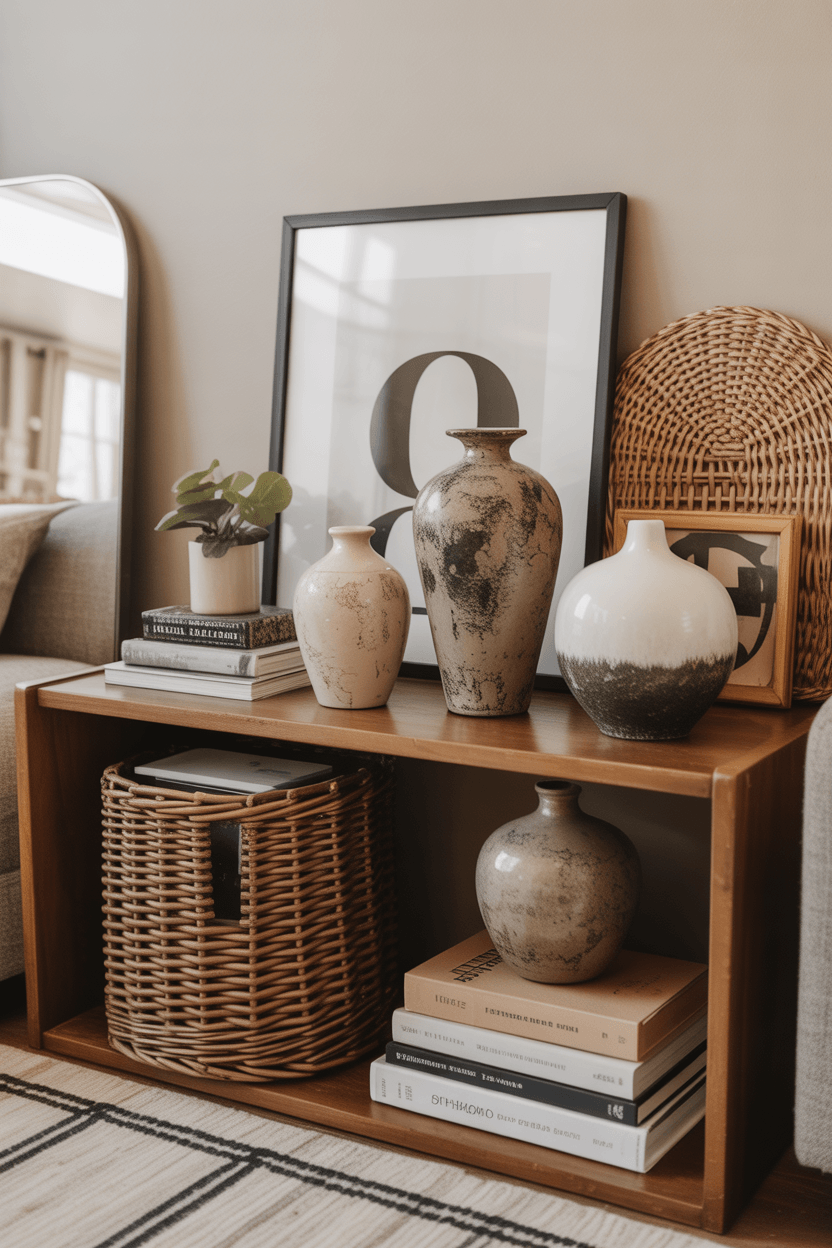
- Style surfaces intentionally. Shelves and coffee tables should be arranged thoughtfully: stacked books, a small plant, a single decorative object. Leave breathing room.
- Add plants. A large fiddle leaf fig or monstera makes more visual impact than a shelf of tchotchkes and brings a room to life in a way that's hard to replicate with objects alone.
- Layer your lighting. Overhead light alone makes even beautiful rooms look flat. Add table lamps, floor lamps, or candles to create warmth and dimension.
- Choose better textures. Natural materials — linen, cotton, wood, ceramic, rattan — photograph and read as quality in a way synthetic materials rarely do, even at the same price point.
Practical Tips for Decorating One Room at a Time
Spreading your budget across the whole house at once almost always leads to the same result: every room half-finished and none of them feeling complete. There's a better way.
Pick one room — ideally the one you spend the most time in — and focus there until it feels genuinely done. The satisfaction of one finished space is also a great way to refine your approach before moving forward.
Practical Tips to Get Started
- Shop your own home first. Before buying anything, move pieces from other rooms. That lamp in the guest room might be exactly what the living room needs.
- Measure before you buy. Furniture that doesn't fit the space isn't a bargain, it's a problem.
- Create a wishlist with photos and dimensions. Revisit it weekly. Your priorities will shift, and that's fine — it also prevents impulse purchases.
- Start with the largest anchor piece. The sofa, the bed, the dining table — build the room around it rather than filling the gaps later.
- Add accessories gradually. Leave space after the big pieces settle. You'll see more clearly what's actually missing.
- Use removable solutions in rentals. Command strips, removable wallpaper, and tension rods have improved enormously and offer genuinely attractive options that won't cost you your security deposit.
- Declutter and clean first. The most beautifully decorated room looks poor if it's cluttered. Cleanliness and organization make every piece look better.

Common Mistakes to Avoid
When buying secondhand shelves, dressers, or media units, always think about safe installation too. For heavy or tall furniture, follow official furniture safety and anchoring guidance before styling the piece in your home.
Even the best intentions can lead to costly errors in budget decorating. Here are the ones worth watching out for:
- Buying something just because it's cheap. Every item you own takes up space, mental energy, and often money to eventually remove. If you don't love it or need it, pass.
- Ignoring scale and proportion. A great deal on an oversized piece that overwhelms your room is still a problem.
- Trying to replicate expensive rooms exactly. Authenticity matters more than precision. Embracing an aesthetic rather than copying it usually looks more interesting anyway.
- Overfilling the space. Negative space is a design element. Use it.
- Buying trendy large furniture pieces. Trends shift quickly. For sofas, dining tables, and beds, classic styles give you far more longevity and resale value.
- Buying frames before choosing art. You'll end up with frames in search of images or art that doesn't fit what you already bought.
- Forgetting installation and safety. Mounting heavy mirrors, shelving, or televisions properly matters for safety, not just aesthetics. When in doubt, consult a professional.
- Ignoring how the room is actually used. A beautiful white sofa with young children, a delicate glass coffee table in a small apartment — beautiful on paper, frustrating in real life.
Budget-Friendly Decorating Ideas by Room
Some quick, practical ideas for keeping home decor on a budget across every room in your home:
Living Room
Start with a neutral sofa (secondhand or affordable retail) and build character through cushions, a quality rug, and layered lighting. A large plant, a simple gallery wall, and a well-styled coffee table can carry most of the visual work. Living room decor on a budget responds particularly well to a focus on textiles: a good throw blanket and a few quality pillows can transform a basic sofa.
Bedroom
Quality bedding is one of the most worthwhile investments in this room — you'll feel the difference every night. Beyond that, a consistent color palette, a secondhand nightstand, and decent window treatments go a long way. Soft lighting makes a huge difference in how a bedroom feels at night.
Entryway
Even a small entryway benefits enormously from a mirror (which also makes the space feel larger), a functional hook or coat rack, and one small decorative element — a plant, a tray, a framed print. These can all be sourced secondhand for very little.
Dining Room
A solid secondhand dining table is one of the best thrift finds available. Chairs don't need to match — mixing styles with a consistent color (paint them the same) looks intentional and interesting. A pendant light and a simple centerpiece complete the space without much spend.
Home Office
If you work from home regularly, a quality desk chair is worth the investment. Everything else — the desk itself, shelving, accessories — can be sourced on a budget. Keep the space organized and relatively minimal; clutter actively reduces focus.
Rental Apartments
Removable wallpaper, tension rods, Command hooks and strips, and peel-and-stick tiles are genuinely good products now — no longer the flimsy compromises they once were. Focus on furniture and textiles as your primary decorating vehicles since walls and fixtures can't be altered.
Frequently Asked Questions
1. What does economy home decor mean?
Economy home decor refers to the practice of decorating your home thoughtfully and beautifully without overspending. It's not about buying the absolute cheapest items — it's about making strategic choices: knowing where quality matters, where budget options work just as well, and how to source pieces at a fraction of retail price. Done well, economy home decor produces spaces that feel genuinely polished and personal.
2. How can I decorate my home beautifully on a small budget?
Start with paint and decluttering — both cost very little and transform spaces more than almost anything else. Then focus on secondhand sources for larger furniture, being patient rather than buying the first thing you see. Use your remaining budget for small new items that are hard to find used, like hardware, textiles, and specific accessories. DIY artwork, framed fabric samples, or simple abstract canvases add personality at minimal cost.
3. Is cheap furniture worth buying?
It depends on the purpose and your timeline. For temporary situations or rarely-used spaces, budget furniture makes sense. For daily-use items like your primary sofa or bed frame, saving for something of better quality typically pays off through longer lifespan and greater comfort. A practical middle approach: buy a budget version initially, then upgrade key pieces as finances allow — moving the original to a less-used area rather than disposing of it.
4. How do I make affordable home decor look expensive?
Focus on cohesion, editing, and finishing details. A limited color palette makes even budget pieces look intentional. Proper styling — books stacked neatly, pillows arranged with care, surfaces that breathe — elevates inexpensive items enormously. Small upgrades like drawer pulls, lampshades, and curtain rods have an outsized effect on how a room reads. Having fewer, well-chosen pieces almost always looks more expensive than abundant clutter, regardless of what individual items cost.
5. What should I buy secondhand for home decor?
Almost anything solid and structural: wooden furniture, dining tables, shelving, dressers, side tables, mirrors, lamps, and ceramic or glass accessories. Upholstered pieces can work if they're in genuinely good condition and you're comfortable assessing fabric wear. Avoid buying secondhand mattresses or items with signs of water damage or structural failure. Textiles like rugs can be great secondhand finds if they're clean and in good repair.
6. What are the biggest mistakes to avoid with economy home decor?
The biggest mistake is buying something simply because it's cheap rather than because you actually need or love it. Budget decor accumulates quickly and creates clutter that makes spaces feel chaotic rather than curated. Other common errors: ignoring scale and proportion, overfilling a room, choosing trendy styles for large furniture pieces that you'll tire of quickly, and skipping proper installation of heavy or mounted items. The best economy home decor is selective, not abundant.
Final Thoughts
Creating a beautiful home without overspending isn't about deprivation or settling for less. It's about being strategic, patient, and genuinely creative with what you have and what you find. The most successful economy home decor comes from understanding your personal style well enough to be selective, knowing where quality actually makes a difference, and enjoying the process of building a space over time rather than buying it all at once.
The rooms that feel most authentic — the ones guests notice and want to know about — are rarely decorated all at once. They grow and change as you do. They carry the evidence of good finds, considered choices, and a clear point of view.
You don't need to overhaul everything to start. Pick one room, or even one corner. Choose one anchor piece that you love. Make one simple update. From there, the rest tends to follow more naturally — and more affordably — than you'd expect.