
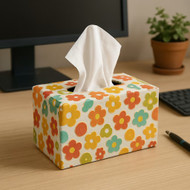
Creative Ways to Decorate Your Kleenex Holder
Posted by graues on 10.04.26
Decorative Tissue Box Holder: How to Upgrade Everyday Essentials Into Stylish Home Decor
You've spent time making your living room feel just right — the cushions are arranged, the coffee table is clear — and then there it is: a crumpled, brightly-printed cardboard tissue box sitting in the middle of it all. It's one of those small things that quietly undermines an otherwise polished space. A tissue box holder is the simplest possible fix. In five minutes, a household necessity becomes a considered decor detail — something that belongs in the room rather than apologizing for being there.

This guide covers everything you need to choose the right holder: the difference between covers and refillable dispensers, the best materials for each room, sizing guidance, DIY ideas, and how to place your holder so it looks intentional rather than afterthought.

Key Takeaways
- There are two main options: a decorative cover that slips over the original box, or a refillable dispenser for a cleaner permanent look.
- Always measure your tissue box before buying a holder — not all brands use the same dimensions.
- Material matters as much as style — choose moisture-resistant options for bathrooms, heavier materials for stability, and soft finishes for bedrooms.
- Placement makes the difference between a holder that looks styled and one that looks placed.
- A simple DIY cover can be just as beautiful as a purchased one — and far more personal.
Why Tissue Box Holders Matter in Interior Design
Tissues are a permanent fixture in most homes — and that means their packaging is too. Standard cardboard tissue boxes are designed to sell on a shelf, not to sit on a nightstand or bathroom counter in a space you've put thought into. The branding, the bright colors, the disposable look — none of it belongs in a curated interior.
A decorative tissue box holder solves the problem without removing the convenience. It keeps tissues accessible while transforming the box into something that complements the room rather than disrupting it. Interior stylists often point to these kinds of small, practical details — alongside things like matching soap dispensers or consistent picture frames — as the finishing touches that make a space feel genuinely complete.
Beyond aesthetics, a good holder adds function. Heavier holders stay put when you pull a tissue one-handed. Covers with lids protect tissues from bathroom splashes. Wall-mounted dispensers free up counter space entirely. The best choices do both jobs well.
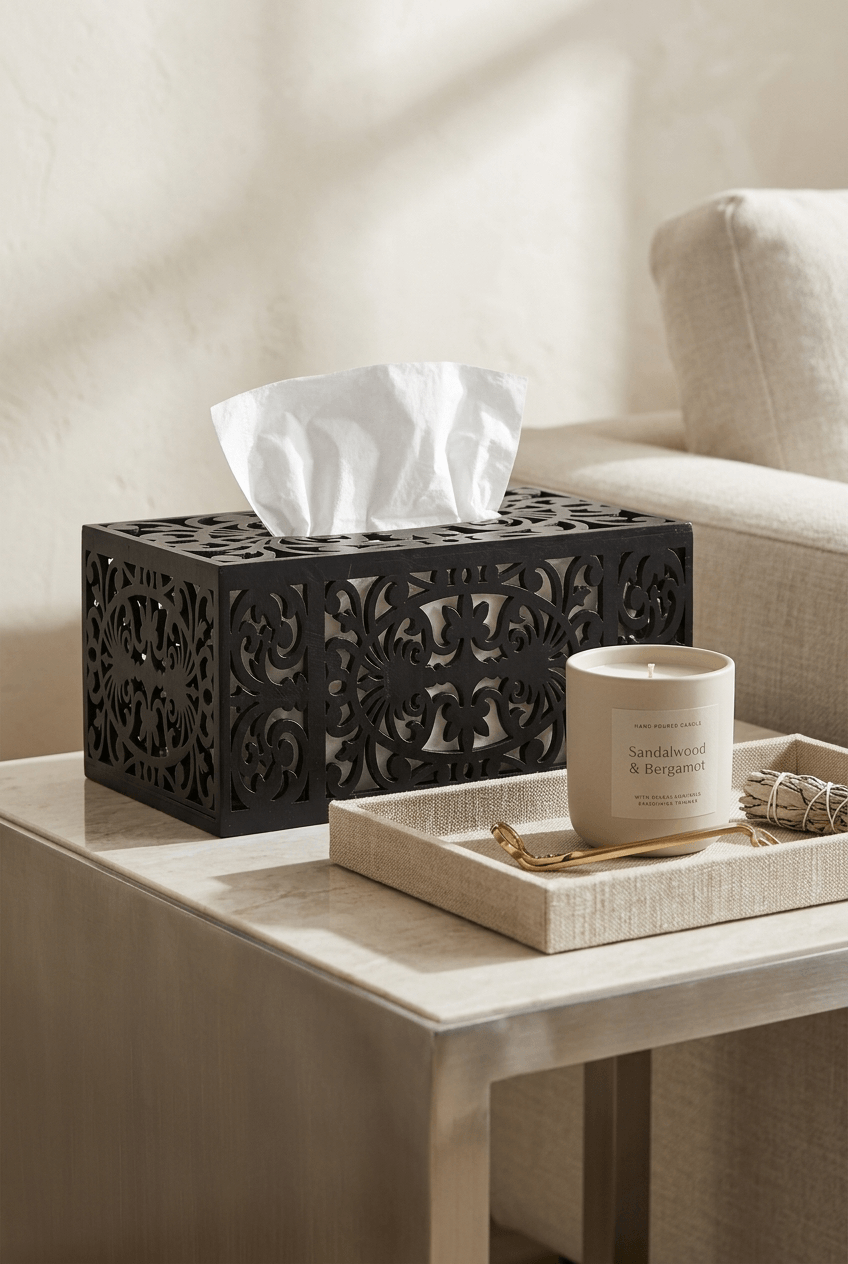
Types of Tissue Box Holders: Cover vs. Refillable Dispenser
Before choosing a material or style, it helps to understand the two fundamentally different approaches to hiding a tissue box.
Tissue box covers are decorative sleeves that slip directly over the standard cardboard box you already buy at the store. They're the easier option — no changes to your shopping habits, no refilling process, and available in every material and finish imaginable. When the box is empty, you lift the cover off, swap the box, and you're done. These are ideal for people who want a quick, low-commitment upgrade.
Refillable tissue box dispensers are self-contained holders that you fill with loose tissues taken from their original packaging. The result is a cleaner, more permanent look — no cardboard, no branding, no visible seams. These work especially well in spaces where the holder is on display, like a guest bathroom or a styled desk. The trade-off is a minor one: you spend a moment loading tissues rather than just swapping a box.
Neither option is better universally — it comes down to how much effort you want to put into the routine and how polished a finish you're after.
Best Materials for Tissue Box Holders
The material you choose affects three things equally: how the holder looks, how it performs, and how long it lasts. Here's a practical breakdown of the most common options.
Wood and bamboo bring warmth and natural texture to any room. A wooden tissue box holder suits living rooms, bedrooms, and home offices particularly well — it pairs naturally with warm finishes, linen textiles, and earthy tones. Bamboo has an added advantage in humid spaces: it's naturally moisture-resistant, making it a smart choice for bathrooms and kitchens that see daily splashes.
Ceramic and resin are the heaviest options and the most practical for one-handed tissue pulling. A holder that doesn't lift off the table when you grab a tissue is a small but genuinely useful feature. These materials are also easy to wipe clean and come in a wide range of finishes — matte, glazed, speckled, and everything in between.
Fabric covers are soft, lightweight, and available in an almost unlimited range of colors and patterns. They're the easiest way to match a tissue holder to existing cushions, curtains, or bedding. The trade-off is that fabric requires more frequent cleaning and isn't suited for wet environments.
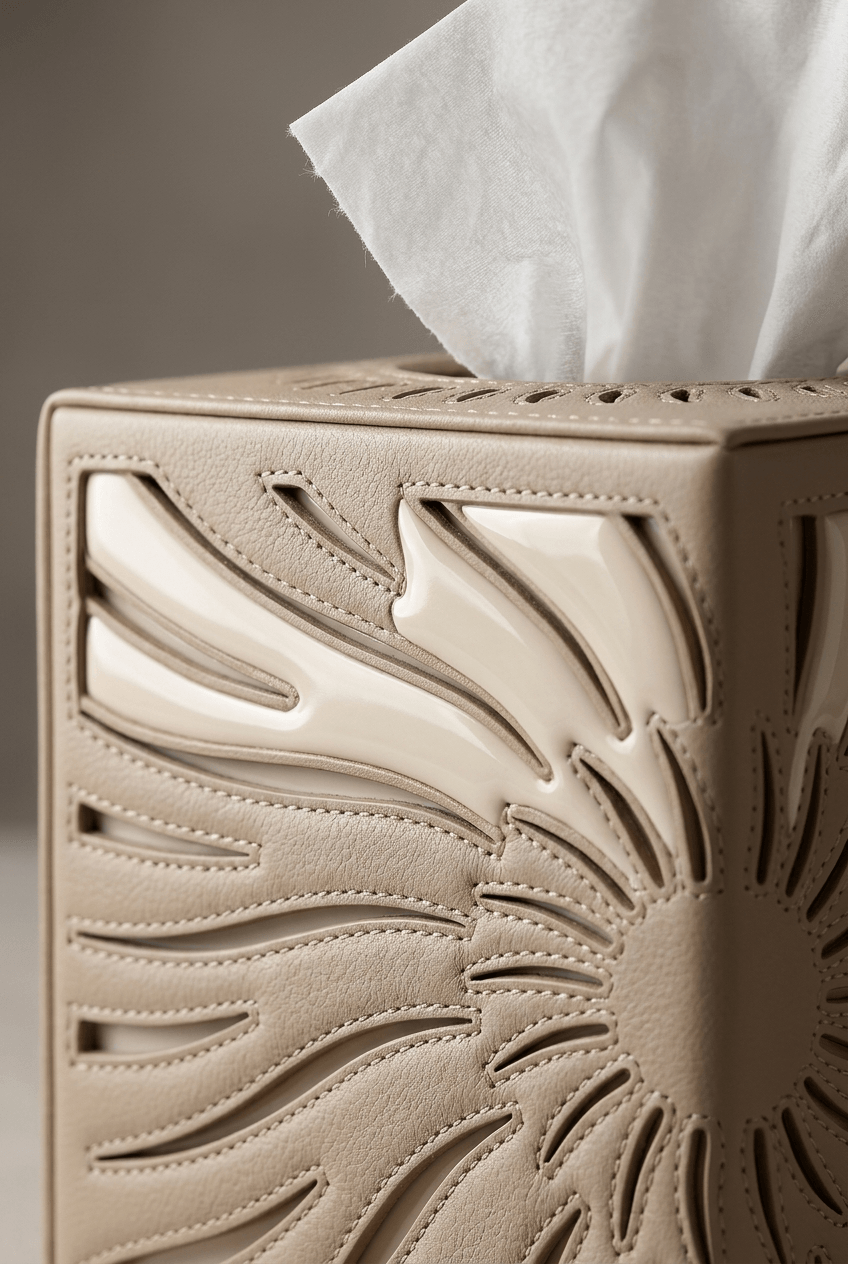
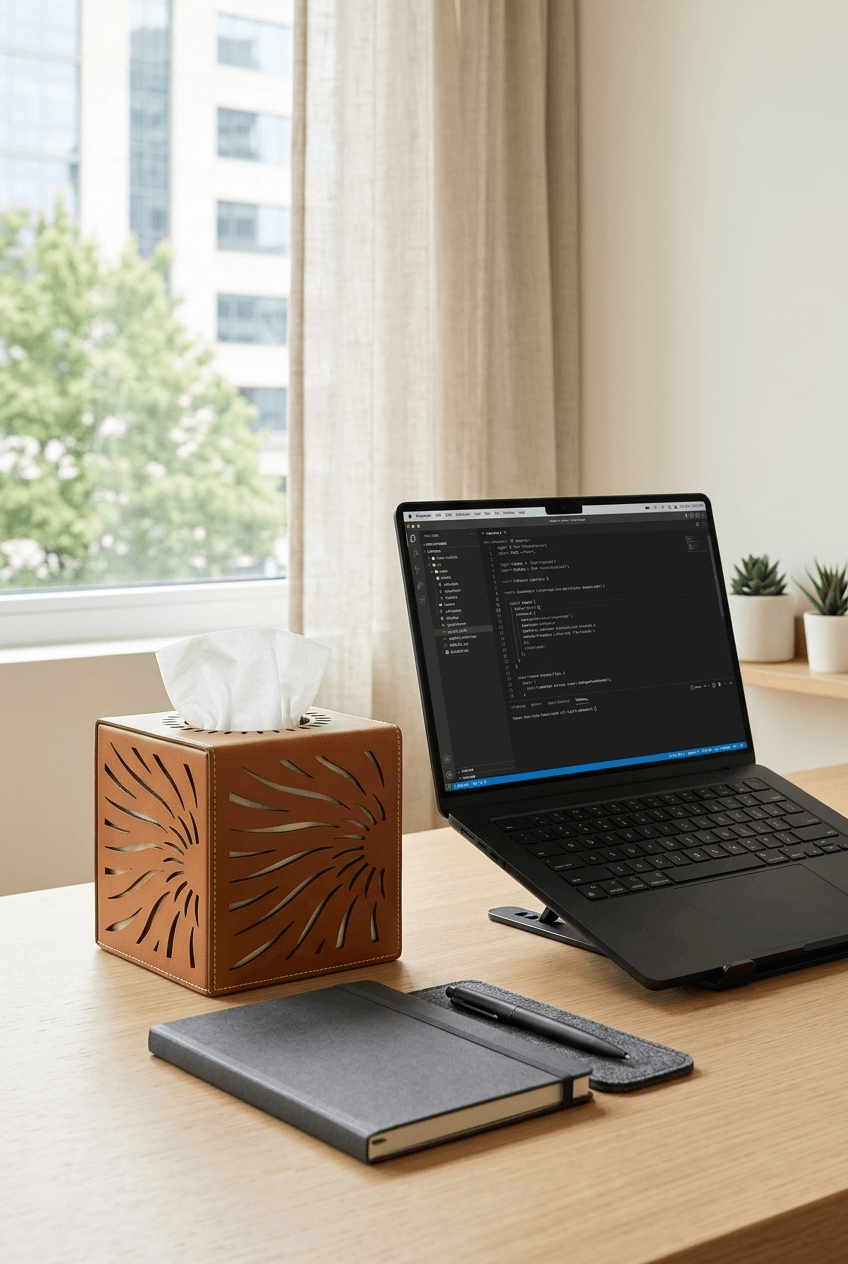
Leather and faux leather add a polished, refined quality that works especially well in home offices and formal living spaces. A luxury tissue box cover in a tan or dark leather finish sits naturally alongside books, desk accessories, and quality furniture without looking out of place.
Plastic and acrylic don't get as much attention in decor conversations, but they're practical where moisture is a constant concern. Modern designs in clear acrylic or frosted finishes can look genuinely contemporary — and they wipe clean in seconds.
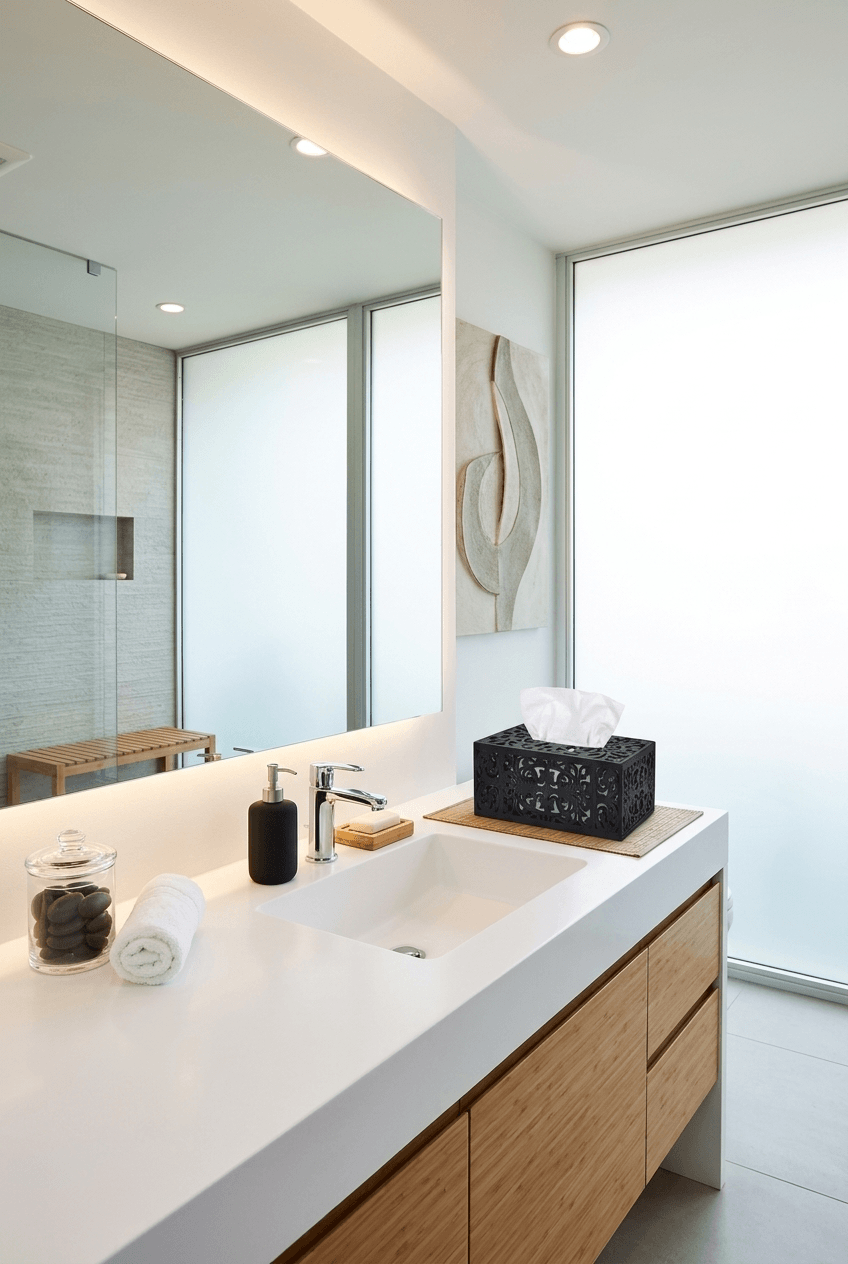
Tissue Box Holder Ideas by Room
Living Room
The living room calls for something that earns its place on a coffee table or side table. Look for holders that complement existing materials — a ceramic piece alongside ceramic candles, a wooden holder near a wooden tray, or a leather cover that echoes the sofa's tone. Some wooden holders include small compartments for remotes or reading glasses, turning a tissue dispenser into a surface organizer. Place it beside the sofa where it's easy to reach without visually dominating the space.
Bathroom
The bathroom is where material choice becomes most critical. Standard cardboard dissolves quickly near a sink — a holder in bamboo, ceramic, resin, or plastic protects tissues and survives the splashes. Wall-mounted dispensers are an excellent option for smaller bathrooms: they remove the holder from the counter entirely, freeing up space around the sink for soaps and other essentials. Most wall-mounted units are straightforward to refill and easy to wipe clean after use.

Bedroom
Bedrooms benefit from a softer approach. Fabric covers in neutral tones — linen, cotton, or velvet — feel appropriate here and can be matched to pillow covers or throws. A nightstand tissue holder should be compact, quiet-looking, and easy to reach in the dark. Keep it simple and understated; the bedroom is not a room where the tissue holder needs to make a statement.
Office
On a desk or in a home office, a tissue holder should look like it belongs alongside notebooks, pens, and a good lamp. Leather or faux leather finishes work especially well here — they read as considered rather than decorative. A holder with clean lines and a neutral finish keeps the desk looking focused and professional rather than cluttered.
Car
Fumbling for a tissue that's slid under the seat is a genuine annoyance — and a distraction. Sun visor tissue holders clip directly to the passenger or driver visor, keeping tissues within easy reach without blocking the view. Center console organizers offer a similar solution with added storage pockets. Most car-specific holders use slim flat-pack tissue refills rather than standard boxes, keeping the profile compact and the car tidy.
Size and Compatibility Guide
One of the most common frustrations with tissue box holders is buying one, getting it home, and discovering that your usual brand of tissues doesn't fit. Tissue boxes are not a universal standard — different brands and product lines use slightly different dimensions.
The three general shapes you'll encounter most often are:
- Standard rectangular (family size) — the long, flat box common in living rooms and kitchens
- Cube or square — the compact upright box, popular in bathrooms and on nightstands
- Boutique or slim — a flatter, sometimes shorter rectangular format found in some premium brands
Before buying any holder, take thirty seconds to measure the cardboard box you currently use — length, width, and height. When shopping online, look for the holder's internal dimensions in the product description and compare them directly. This single step avoids the most common buying mistake.
If you're choosing a refillable dispenser rather than a cover, the internal dimensions matter even more, since tissues need to stack cleanly inside without jamming at the opening.
DIY Tissue Box Holder Ideas
A custom cover doesn't require advanced craft skills or much time. Here are three approaches that work for different skill levels and budgets.
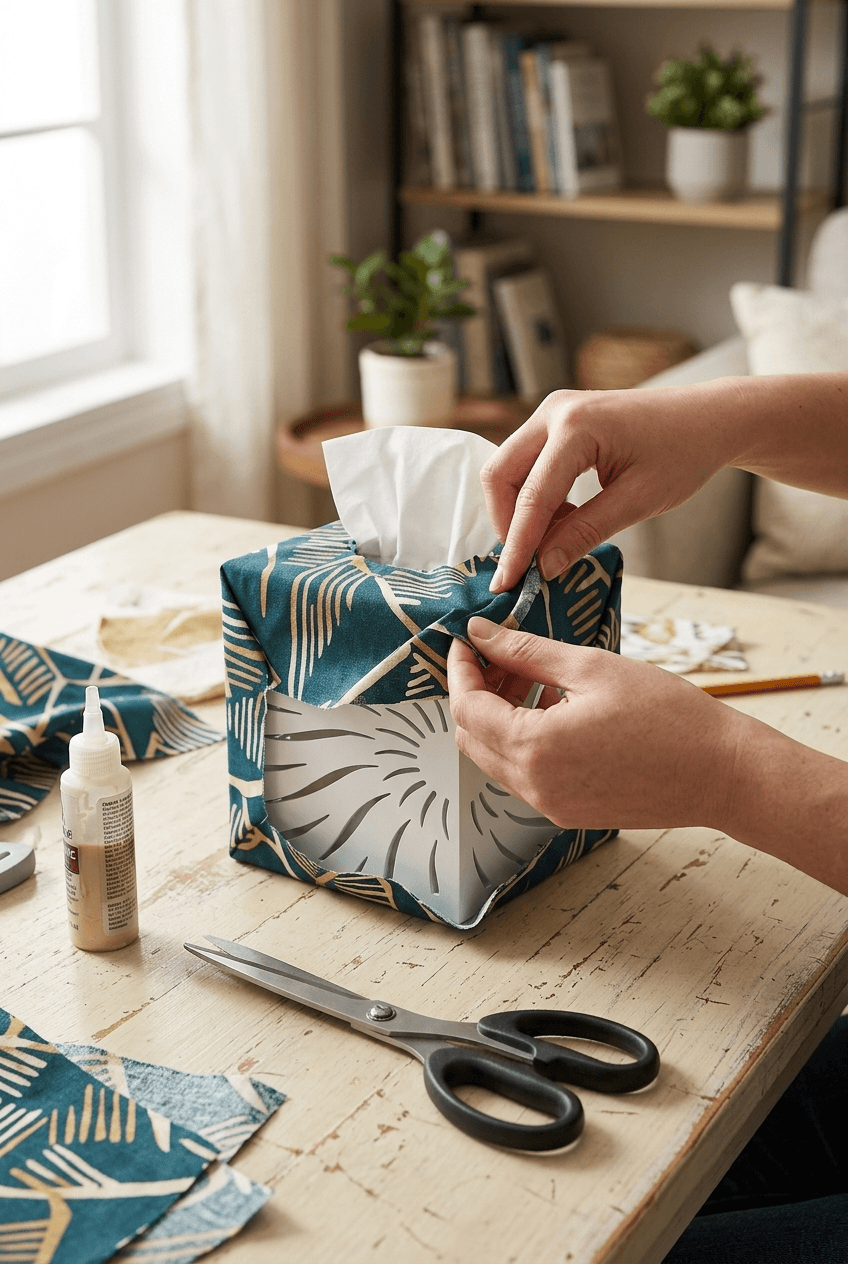
Fabric wrap (no-sew, under 10 minutes): Take a piece of fabric you love — something that matches your cushions or curtains — and wrap it around the cardboard box the way you'd wrap a gift. Secure the ends with a few dots of hot glue or strong double-sided tape. Use scissors to cut a careful 'X' over the dispensing opening. The result is a custom cover that costs almost nothing and can be changed any time you redecorate.
Painted wooden holder: Plain, unfinished wooden tissue box holders are available inexpensively at craft stores and online. A coat of paint — matte, chalk, or satin finish — transforms them entirely. Add a stencil pattern, a monogram, or a simple geometric shape for extra personality. The finished piece looks considered and can be repainted whenever your room changes direction.
Knitted or crocheted sleeve: For those who knit or crochet, a tissue box sleeve is a quick, satisfying project. It adds warmth and texture to a bedroom or living room surface, and the handmade quality is something no purchased holder can replicate. Patterns are widely available on craft platforms and can be adapted to match any color palette.
Cleaning and Maintenance Tips
Different materials need different care — and knowing this upfront saves you from damaging a holder you love.
- Ceramic and resin: Wipe with a damp cloth and mild soap. Dry immediately to prevent water spots. These are the most forgiving materials to maintain.
- Wood and bamboo: Wipe with a slightly damp cloth — never soak. Avoid harsh cleaners that can strip the finish or raise the grain. A light application of wood conditioner once or twice a year keeps wooden holders looking fresh.
- Fabric covers: Most can be spot-cleaned with a damp cloth for surface marks. For a deeper clean, remove the cover and check the care label — many are machine washable on a gentle cycle. Always air dry to prevent shrinkage.
- Leather and faux leather: Wipe with a dry or very slightly damp cloth. Use a leather conditioner occasionally on genuine leather to prevent cracking. Avoid alcohol-based cleaners on faux leather.
- Plastic and acrylic: The easiest of all — most household surface cleaners work fine. Avoid abrasive cloths that can scratch clear acrylic finishes.
For all holders, a quick dust or wipe-down once a week keeps them looking as good as the day you bought them. Regular maintenance also lets you catch any moisture damage, staining, or wear early — before it becomes harder to address.
Placement Tips for a Stylish Home
Where you put a tissue holder matters as much as which one you choose. Placement determines whether it looks styled or just placed.
- Give it a designated home. A tissue holder that gets moved around constantly never looks intentional. Choose a permanent spot — beside the sofa, on the nightstand, near the bathroom sink — and keep it there.
- Group it with complementary objects. A holder looks more considered when it sits alongside a candle, a small plant, or a decorative tray. Think of it as part of a small vignette, not a standalone item.
- Align it with the room's materials. A wooden holder on a surface with other wood tones, a ceramic piece near ceramic accessories — these small material connections are what make a room feel curated rather than random.
- Consider sightlines. In a living room, the holder should be visible and accessible from the seating area. In a bathroom, it should be within arm's reach of the sink or toilet without sitting directly in the splash zone.
- Don't hide it completely. The holder is doing a job — it needs to be findable. The goal is to integrate it into the room naturally, not tuck it somewhere inconvenient.

FAQ
What is a tissue box holder used for?
A tissue box holder is a decorative or functional cover that conceals or replaces the standard cardboard packaging that facial tissues come in. It keeps tissues accessible while improving the visual appearance of the surface they sit on — whether that's a coffee table, bathroom counter, nightstand, or desk. Some holders also add practical benefits like weight for stability, moisture resistance, or extra storage compartments.
What is the best material for a tissue box holder?
It depends on where the holder will live. For bathrooms and kitchens, moisture-resistant materials like bamboo, ceramic, resin, or plastic are the practical choice. For living rooms and bedrooms, wood, fabric, or leather finishes add warmth and character. For desks and home offices, leather or faux leather keeps things looking polished and professional. Heavier materials — ceramic and resin in particular — have the added benefit of staying put when you pull a tissue one-handed.
Can I use a tissue box cover in the bathroom?
Yes — but the material matters. Fabric and unfinished wood are not ideal in bathrooms where splashes are common. Opt for a bathroom tissue holder in ceramic, resin, bamboo, or sealed plastic that can be wiped clean quickly and won't deteriorate with regular moisture exposure. Wall-mounted dispensers are an excellent bathroom option as they keep tissues well above the counter splash zone entirely.
How do I clean a decorative tissue box holder?
Cleaning method depends on material. Ceramic and resin holders can be wiped with a damp cloth and mild soap. Wood and bamboo should be wiped with a barely damp cloth and never soaked. Fabric covers can usually be spot-cleaned or machine washed on a gentle cycle — check the care label first. Leather and faux leather respond well to a dry cloth and occasional conditioner. Regular light cleaning once a week is enough to keep any holder looking its best.
Do all tissue boxes fit in standard holders?
No — tissue box dimensions vary between brands and product lines. Standard rectangular (family size), cube, and boutique (slim) boxes all have different measurements, and not every holder accommodates every format. Before buying, measure your current tissue box — length, width, and height — and compare those numbers to the holder's listed internal dimensions. This takes thirty seconds and avoids the most common purchasing mistake.
Why should I use a tissue box holder in home decor?
Standard tissue box packaging is designed to sell on a shelf, not to sit in a curated room. The branding and disposable look can disrupt an otherwise polished space. A decorative holder transforms that necessity into something that belongs in the room — and in many cases adds practical value too, with better stability, moisture protection, and surface organization. It's one of those small details that collectively determine whether a room feels finished or not.
Final Thoughts
Choosing the right tissue box holder is a small decision with a surprisingly visible impact. It's the kind of detail that doesn't demand attention — it just quietly makes the room feel more finished. A cardboard box that used to apologize for being there becomes something that belongs.
Start with the room that bothers you most. Measure your tissue box. Choose a material that suits the space — its humidity, its style, its existing finishes. Then place the holder somewhere it looks deliberate, not dropped.
That's it. Five minutes, one small upgrade, and one less thing in your home that doesn't quite fit.